
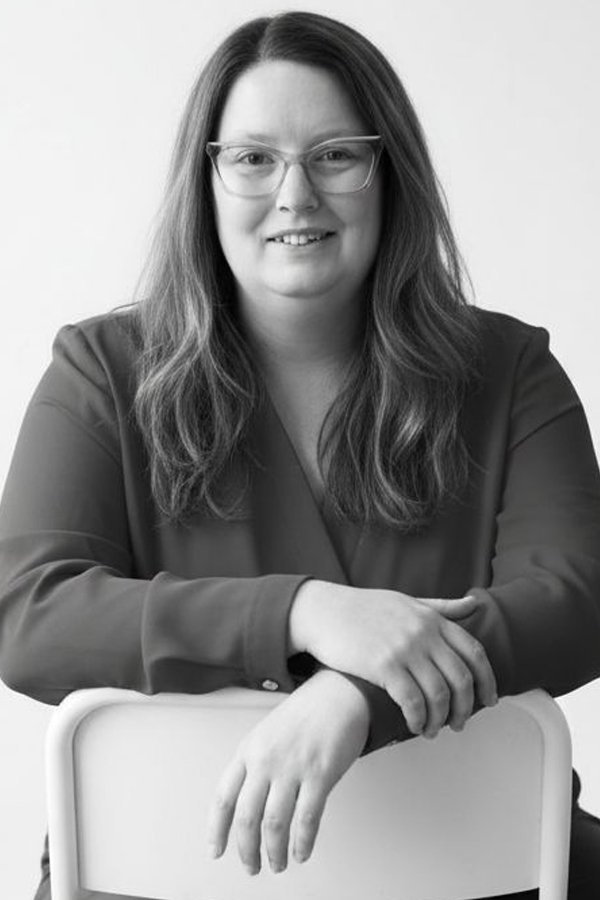
Jodi Bowe
This Spotlight appeared in our June 2026 newsletter.
Please introduce yourself and tell us where you live.
It’s me, Jodi Bowe, and I’m a VWD Type 3 survivor. I grew up with 2 brothers, one of whom also has Type 3. My parents had no idea they were affected by von Willebrand until I (the first) was born. My family includes my husband Tom, and our three boys that we’ve adopted Daron, Devon and Tony. The first two boys are twins. We also have two magnificent Australian Shepherd dogs. Bella and Mocha. I grew up and live in rural Wisconsin. My favorite things to do includes anything crafting. I have a whole room dedicated to that in my house.
What do you like about the area you live in? Anything you don’t like?
Kettle Moraine State Forest in Wisconsin is known for highly irregular, hilly terrain sculpted by ancient glaciers. The landscape is a picturesque mix of dense hardwood forests, glassy kettle lakes, deep green marshes, and rolling prairie restorations. If you are a motorcycle rider like my husband and I, you gotta check it out.
I guess dislikes would and would not include the weather. We get all four seasons to the extreme here. But as they say, “don’t like the weather? Just wait a while, it’ll change.”
You and your husband Tom have attended every VWD Connect Conference since the beginning in 2017. How did you first hear about the Conference?
I still remember vividly actually. My HTC social worker gave me a brochure about this new and upcoming group for Type 3’s who wanted to get together in Florida. I showed it to my co-surviving brother and we unanimously agreed. We also had our dad come along. Best. Decision. Ever!
Looking back over the years, have you noticed anything that has changed about the conferences?
All I see is positive things going on. We are like a huge family that never met another person with severe bleeding before until this happened. Now everyone pretty much knows everyone else. When we get together, we talk like we’re doctors ourselves with all the expert knowledge being taught.
During COVID when we started our Zoom programming, you were an original member of the book club. What types of books do you like to read? Is there a favorite book you would recommend?
I used to climb into my hammock and just read for hours out in the sunshine. “Don’t bother mommy now kids, mommy’s reading.” I love books that make you have to think a bit. Basically, anything listed in Oprah’s Book Club. My favorite author is Toni Morrison.
Not only were you in book club, but you attended — and even ran — some of our craft club events. Which crafts do you love most?
I crochet, knit, hand knit chunky blankets, paint by numbers, Diamond dots, and now I’m toying around a bit with calligraphy. I absolutely love to do hand knit chunky blankets! I donate one every year for the Golf Tournament fundraiser.
If you could vacation anywhere, where would it be and why?
Easy question! Ireland, and not just because I’m Irish. From the images I’ve seen, it kinda looks like the Kettle Moraine but with castles. I actually have an ancestor that was a king in Ireland.
What do you like most about being a Member of the Foundation?
• The feeling of “these are my people”
• I can now advocate for myself
• Meeting Jeanette!
• These educators who come to speak actually care about our wellbeing
• Watching the young members grow up
Looking ahead, any thoughts about what the Foundation or the world of severe VWD may look like 10 years from now?
The Foundation is growing nicely. But that could also mean that more people are being born with it. I’d like to see craft club come back, but that’s just me. As for VWD, so much has changed already that my head is spinning! When you grew up in the ’70s and ’80s, help was nonexistent. I don’t want the future kids to have bad joints like us old folks do.
Any last thing you would like to share?
There was a Doctor in Milwaukee who
studied blood clotting named Dr. Armand Quick. He was my first doctor for this. He developed a test called “the Quick test” to test how long your bleeding time was (when your blood would finally clot). He would cut a small slit on my earlobe and every so often dab a round, white paper to the blood. When I was old enough to start writing, I printed him a short note. When Dr. Quick later published a book about the Quick test and his life, my note and first name was included in the publication. The note said “thanks for giving me a chance at life.“•